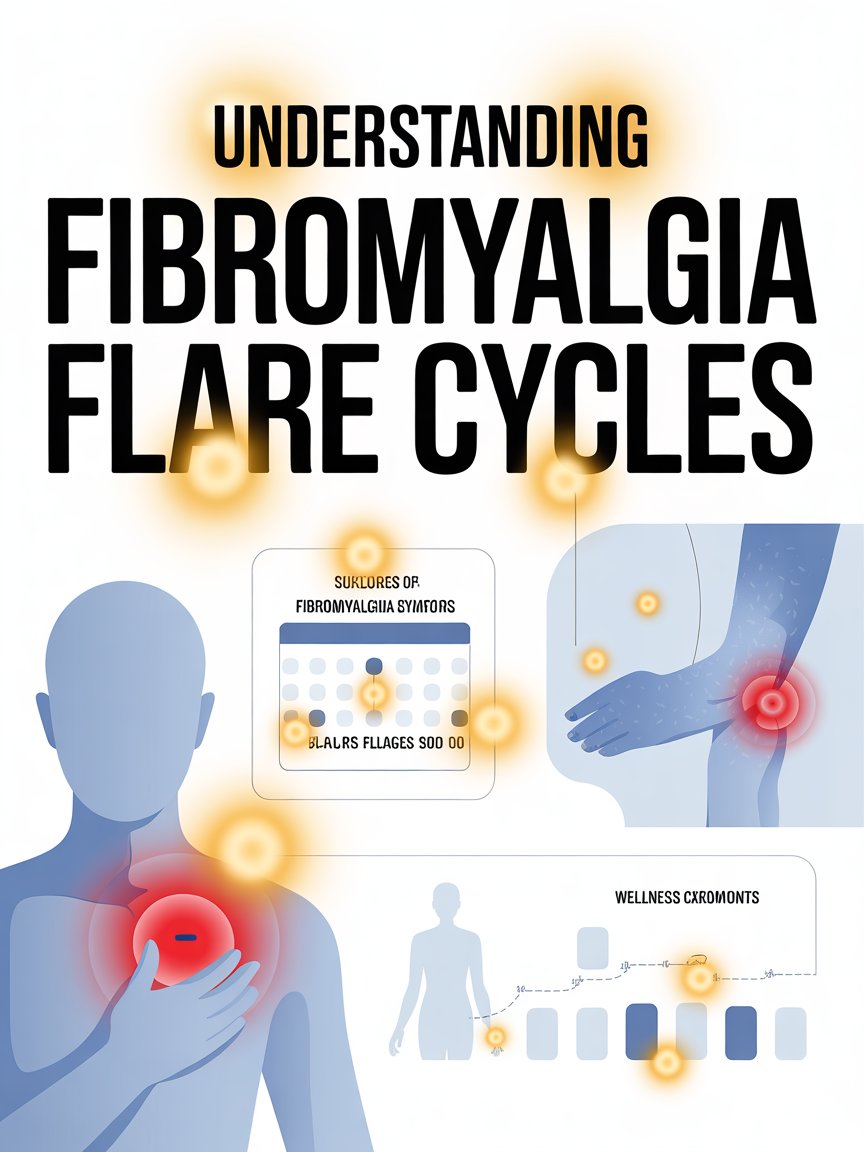
Understanding Fibromyalgia Flare Cycles
1. What Are Fibromyalgia Flare Cycles?
Fibromyalgia flare cycles refer to periods when symptoms suddenly become more intense. During a flare, people may experience increased pain, fatigue, sleep problems, and mental fog. These cycles can last from a few hours to several days or even weeks.
Understanding flare cycles helps individuals recognize patterns and manage symptoms more effectively.
2. The Nature of Fibromyalgia Symptoms
Fibromyalgia symptoms often fluctuate rather than remain constant. Some days may feel manageable, while others may bring severe discomfort and exhaustion.
These fluctuations are part of the condition’s natural pattern and are often referred to as flare cycles.
3. Common Signs of an Approaching Flare
Many people notice early warning signs before a flare begins. These may include rising fatigue, increased sensitivity to pain, mood changes, or trouble sleeping.
Recognizing these signals early allows individuals to adjust their activities and reduce the severity of the flare.
4. Physical Triggers of Flare Cycles
Physical strain is one of the most common triggers for fibromyalgia flares. Overexertion, heavy physical work, or lack of rest can lead to increased pain and fatigue.
Balancing activity with adequate recovery time can help prevent these triggers.
5. Stress as a Major Trigger
Emotional or mental stress can significantly influence fibromyalgia flare cycles. Stress increases muscle tension and affects how the nervous system processes pain signals.
Learning effective stress management techniques may help reduce the frequency of flares.
6. Weather and Environmental Changes
Some people with fibromyalgia report that changes in weather or temperature affect their symptoms. Cold temperatures, humidity, or sudden weather shifts may contribute to flare cycles.
Keeping the body warm and maintaining comfort can help reduce environmental triggers.
7. Sleep Disruptions and Flares
Poor sleep is closely linked to fibromyalgia flares. When the body does not receive restorative sleep, pain sensitivity and fatigue can increase.
Improving sleep habits may help reduce the likelihood of flare cycles.
8. The Role of the Nervous System
Fibromyalgia is believed to involve changes in how the nervous system processes pain. The brain and nerves may amplify pain signals, making normal sensations feel more intense.
During flare cycles, this heightened sensitivity can become even stronger.
9. Hormonal and Lifestyle Influences
Hormonal changes, diet, and daily habits can also affect flare patterns. Irregular schedules, unhealthy eating habits, or lack of movement may contribute to worsening symptoms.
Maintaining a balanced lifestyle can support better symptom stability.
10. Managing a Flare When It Happens
When a flare begins, the focus should shift to rest and symptom management. Reducing physical activity, practicing relaxation techniques, and prioritizing sleep can help the body recover.
Listening to the body’s needs during these periods is essential.
11. Tracking Flare Patterns
Keeping a symptom journal can help identify patterns in flare cycles. Recording activities, stress levels, sleep quality, and diet may reveal common triggers.
This information can help individuals make adjustments to prevent future flares.
12. The Importance of Pacing
Pacing is a key strategy for managing fibromyalgia. It involves spreading activities throughout the day rather than completing everything at once.
By pacing tasks, people can avoid overexertion that might lead to flare cycles.
13. Emotional Impact of Flare Cycles
Frequent flares can affect emotional well-being. The unpredictability of symptoms may lead to frustration or anxiety.
Building coping strategies and seeking emotional support can help manage these challenges.
14. Long-Term Management Strategies
Although flare cycles may never disappear completely, they can often be reduced with consistent self-care. Healthy routines, balanced activity, and stress management can help stabilize symptoms over time.
Many individuals find that understanding their triggers leads to better control.
15. Living Better With Fibromyalgia Flare Cycles
Understanding fibromyalgia flare cycles empowers individuals to respond proactively rather than reactively. By recognizing early signs, avoiding triggers, and maintaining healthy habits, it becomes possible to reduce the intensity and frequency of flares.
With patience and self-awareness, people living with fibromyalgia can manage flare cycles and improve their overall quality of life.
Leave a Reply