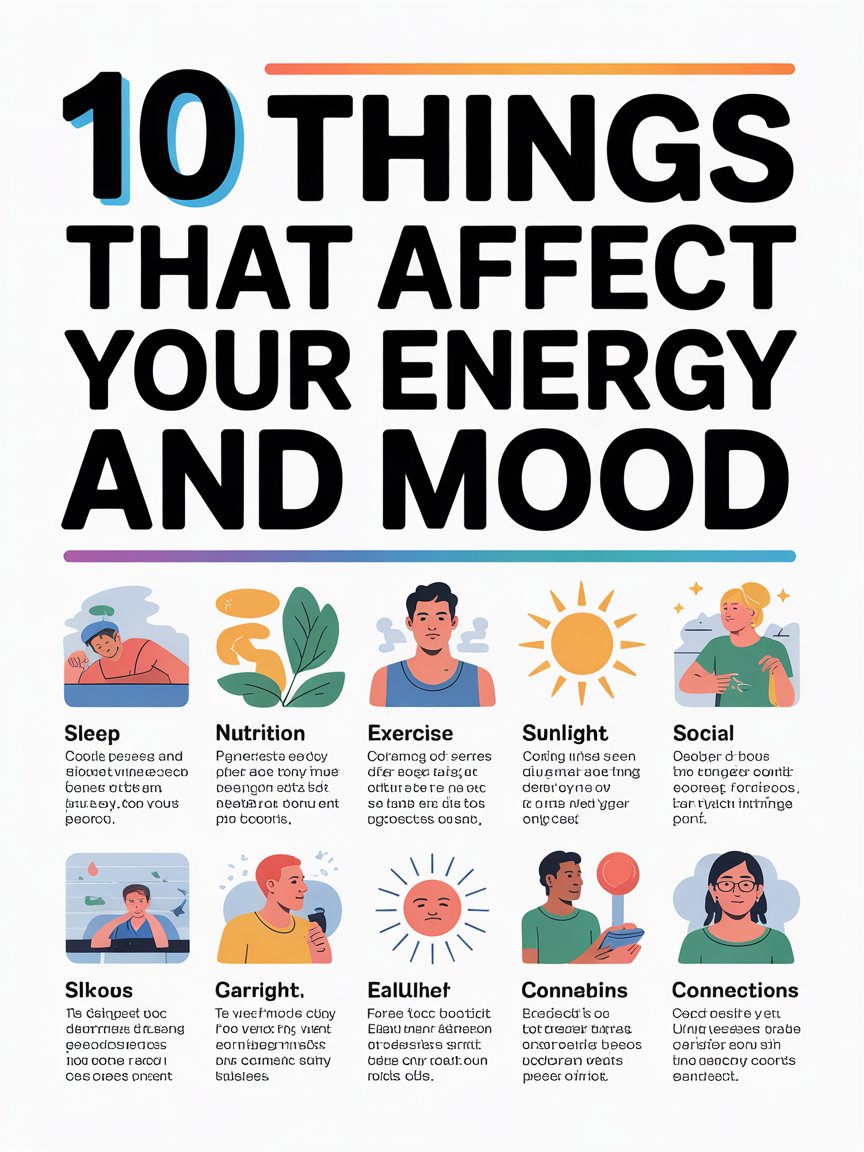
10 Things That Affect Your Energy and Mood
Introduction
Your energy and mood are closely connected and influenced by daily habits, lifestyle choices, and overall health. For individuals living with Fibromyalgia or Chronic Fatigue Syndrome, even small changes can have a noticeable impact. Understanding these factors can help you maintain better balance and feel more in control each day.
1. Sleep Quality
Sleep is the foundation of both energy and emotional balance.
Poor or inconsistent sleep can lead to fatigue, irritability, and reduced focus.
What to Improve
Stick to a consistent sleep schedule and create a relaxing bedtime routine.
2. Stress Levels
Stress drains your energy and affects your mood.
Chronic stress can lead to exhaustion, anxiety, and increased pain sensitivity.
What to Improve
Practice stress-management techniques like meditation or deep breathing.
3. Physical Activity
Movement plays a key role in energy levels.
Too little activity can make you feel sluggish, while too much can cause fatigue.
What to Improve
Aim for gentle, balanced movement such as walking or stretching.
4. Diet and Nutrition
What you eat directly impacts how you feel.
Unhealthy foods can cause energy crashes and mood swings.
What to Improve
Focus on balanced, nutrient-rich meals.
5. Hydration
Water is essential for both physical and mental function.
Dehydration can cause fatigue, headaches, and irritability.
What to Improve
Drink enough water throughout the day.
6. Overexertion
Doing too much without rest can drain your energy quickly.
It often leads to fatigue and frustration, affecting your mood.
What to Improve
Balance activity with rest and pace yourself.
7. Negative Thinking
Your thoughts influence your emotional state.
Constant negativity can lower your mood and make fatigue feel worse.
What to Improve
Practice positive thinking and mindfulness techniques.
8. Social Interaction
Your social environment affects how you feel.
Isolation can lead to low mood and reduced motivation.
What to Improve
Stay connected with supportive people in your life.
9. Hormonal Changes
Hormones can influence both mood and energy levels.
Fluctuations may lead to fatigue, irritability, or emotional changes.
What to Improve
Track patterns and consult a professional if needed.
10. Daily Routine
An inconsistent routine can disrupt your balance.
Irregular sleep, meals, and activities can lead to unstable energy and mood.
What to Improve
Create a structured daily routine.
Understanding the Connection
Energy and mood are influenced by both physical and emotional factors. When one is affected, the other often follows.
Small Changes, Big Impact
Simple improvements—like better sleep or hydration—can significantly boost both energy and mood.
Building Healthy Habits
Consistency in daily habits helps create stability and long-term well-being.
Long-Term Benefits
Managing these factors can lead to improved focus, better emotional balance, and increased energy.
Leave a Reply