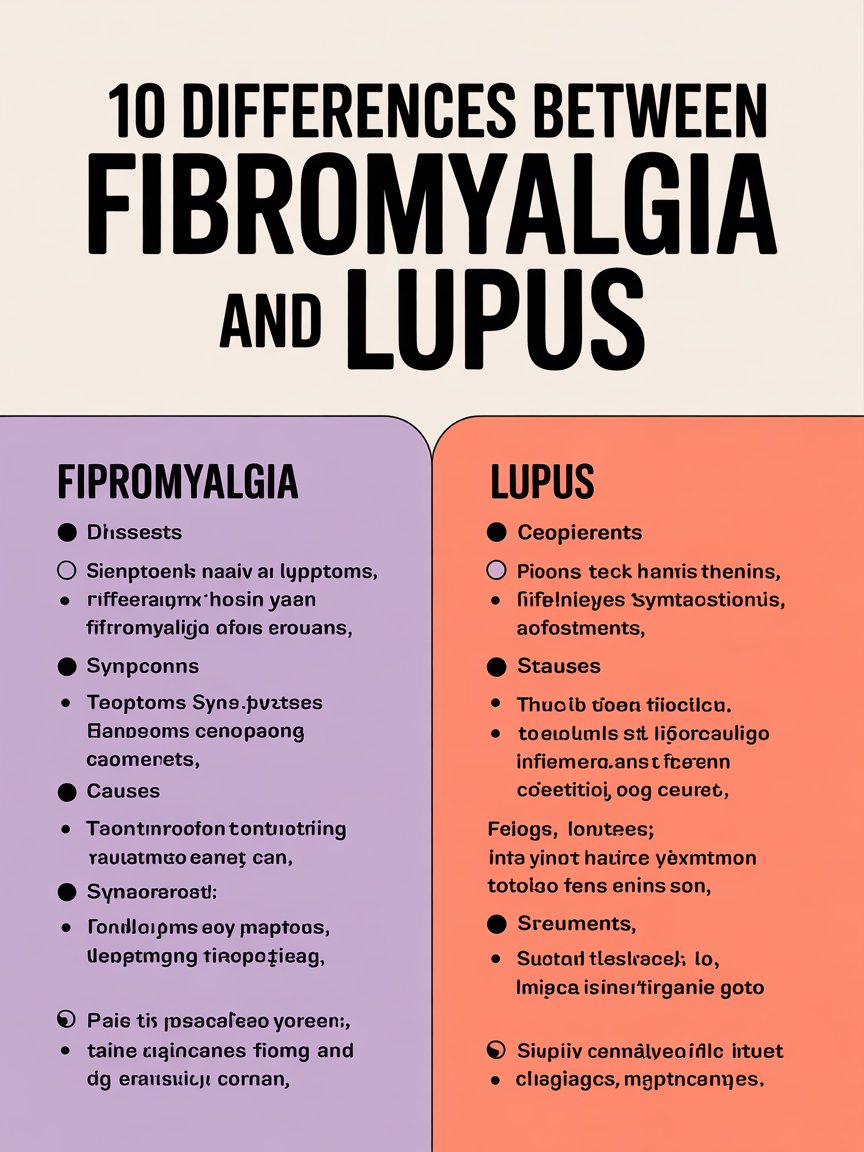
10 Differences Between Fibromyalgia and Lupus
Fibromyalgia and lupus are chronic health conditions that often share similar symptoms, including fatigue, pain, and difficulty performing daily activities. Because of these overlapping signs, many people initially struggle to understand which condition they might be experiencing. However, these disorders have very different causes and effects on the body.
Fibromyalgia mainly affects how the brain processes pain signals, while lupus is an autoimmune disease that can damage organs and tissues. Knowing the key differences between these two conditions can help people better understand their symptoms and seek the appropriate treatment. Below are ten important differences between fibromyalgia and lupus.
1. Type of Condition
Fibromyalgia Is a Nervous System Disorder
Fibromyalgia is considered a chronic pain disorder related to the central nervous system. It causes widespread body pain without visible damage or inflammation in tissues.
Lupus Is an Autoimmune Disease
Lupus occurs when the immune system mistakenly attacks healthy cells and tissues. This autoimmune reaction can affect many parts of the body, including the skin, joints, and organs.
2. Underlying Cause
Fibromyalgia Causes Are Not Fully Known
The exact cause of fibromyalgia remains unclear. Experts believe it may be linked to genetics, physical trauma, infections, or emotional stress that alters how the brain processes pain.
Lupus Is Caused by Immune System Dysfunction
Lupus develops when the immune system becomes overactive and begins attacking the body itself. Genetic factors, environmental triggers, and hormonal changes may contribute to the condition.
3. Inflammation in the Body
Fibromyalgia Usually Has No Inflammation
People with fibromyalgia often experience severe pain, but medical tests typically do not show inflammation or tissue damage.
Lupus Involves Significant Inflammation
Inflammation is a key feature of lupus. The immune system’s attack on tissues leads to swelling, irritation, and possible organ damage.
4. Pain Location
Fibromyalgia Causes Widespread Pain
Fibromyalgia pain usually spreads throughout the body and affects muscles, ligaments, and soft tissues. The pain may move from one area to another.
Lupus Pain Often Targets Specific Joints
Lupus commonly causes pain and stiffness in joints such as the hands, wrists, and knees. The discomfort is often linked to inflammation in these areas.
5. Skin Symptoms
Fibromyalgia Rarely Causes Skin Problems
People with fibromyalgia generally do not experience visible skin rashes or lesions related to the condition.
Lupus Frequently Causes Skin Rashes
A well-known symptom of lupus is a butterfly-shaped rash across the cheeks and nose. Other skin issues may include sensitivity to sunlight and skin lesions.
6. Fatigue Patterns
Fibromyalgia Causes Constant Fatigue
Fatigue in fibromyalgia can be persistent and overwhelming. Many people feel exhausted even after sleeping for long periods.
Lupus Fatigue Often Occurs During Flares
People with lupus may experience intense fatigue during flare-ups when the disease becomes more active.
7. Organ Involvement
Fibromyalgia Does Not Affect Organs
Although fibromyalgia can be extremely painful, it does not cause damage to organs such as the kidneys, heart, or lungs.
Lupus Can Damage Internal Organs
Lupus can affect several organs, including the kidneys, heart, lungs, and brain. In severe cases, organ complications may become serious if untreated.
8. Diagnostic Testing
Fibromyalgia Is Diagnosed Through Symptoms
Doctors usually diagnose fibromyalgia based on a person’s symptoms, medical history, and physical examination. There is currently no single laboratory test that confirms it.
Lupus Can Be Identified With Blood Tests
Lupus often shows specific markers in blood tests, such as antinuclear antibodies (ANA) and other immune-related indicators.
9. Pain Sensitivity
Fibromyalgia Increases Sensitivity to Pain
People with fibromyalgia often have heightened sensitivity to touch and pressure. Even mild physical contact can sometimes feel painful.
Lupus Pain Is Related to Inflammation
In lupus, pain usually occurs because of inflammation in joints or tissues rather than increased pain sensitivity.
10. Treatment Approach
Fibromyalgia Treatment Focuses on Managing Symptoms
Fibromyalgia treatment usually includes lifestyle changes, gentle exercise, stress reduction, and medications that help regulate pain signals in the brain.
Lupus Treatment Targets the Immune System
Treatment for lupus often involves medications that suppress the immune system and reduce inflammation to prevent organ damage.